Monday, July 28, 2014

The reasons why many European startups are failing, and it might come from a surprising place.

 By Paul Chen


Here in Poland, startup veterans like Piotr Wilam and Bartek Gola keep wondering when will Poland have our big success.   The main reasons aren't in the product development.  

The Anakin Skywalker complex

In the prequels to the original Star Wars, it tells how Anakin Skywalker turned into Darth Vader.  The main reason was that as talented and powerful as Anakin was, he was really impatient and wanted to show off his power and rise up through the ranks and be recognized for it too.  I can see it happening here in Poland.  It is a national character of Poland to care too much what others are thinking about you.  As George Feeny says," If you care too much about what others think of you, you will never develop as a person."
There are indeed many potentially great startups in Poland.  They will get their recognition in due time.  However, I believe that there are still a lot of growth to do.   There have been hyperbolic pieces on how Poland is getting set to take over the world.  These pieces have been met with criticism.  I agree with a certain Games of Throne character when he said,"A king does not need to announce himself to be king."


I was talking to Jakub Krzych, founder of Estimote, the other night.  I agree with how they are proceeding with their growth.  They are not making many big announcements, nor are they seeking all kinds of media attention.  What they are doing is working hard and trying to perfect their business offers.  They realize that they are not the only beacon game in town.  What they have is really wonderful brand recognition perhaps through their participation in Y Combinator or having won TechCrunch's Disrupt.  That gives you a certain amount of capital and public trust.   Hardware is really hard because you got to get it right on the first iteration.  There are no software patches to fix the bugs.  If you get hardware wrong, it gets really expensive.  You don't get a second chance to make a first impression and you get bad PR.  And doing a massive recall on hardware is seriously expensive, because of shipping and the refurb.  So what they are doing is to make sure they have a solid piece of hardware and a wonderful suite of applications as their offer.  When others are selling the same hardware as you, it's your software that will set you apart.  They already have some high profile clients such as Virgin Atlantic and nTrust.  There should be more startups with such ways of working.  

Missing pieces of a sustainable entrepreneurial community


In Brad Feld's book, he mentioned that a sustainable entrepreneurial community needs to have four things:

  • Two types of people: leaders (entrepreneurs) and feeders (people who support startups, such as government agencies, funders, service providers). While the "feeders" are the very fabric of the community, the entrepreneurs must be in the lead.
  • A long-term view and commitment to building this community
  • A philosophy of inclusiveness that welcomes everyone with an interest, not just entrepreneurs
  • Substantive activities that engage the entire community to help startups move forward

Here in Poland, we only have one of these.  There are conferences like Bitspiration.  There are meetups like Geek Girls Carrots.  There are workshops like Webmuses. And locally here in Krakow: Krakspot, Startup Stage, Hive Swarm and Open Coffee.  These activities  
There is a popular view point that people in the CEE region aren't known for being warm to outsiders.  And I can feel it.  Some one once said that Czechs and to some extent Poles are like water, it takea a long time to warm up, but once it gets boiling it stays warm as long as you continue to add heat.  To some extent I still feel like an outsider.  It could be because I am not a programmer or a designer.  It could be because I don't speak the local language.  It could be because I am not Polish.  A lot of my expat entrepreneurs feel the same way.  It feels like the only people that Poles would like to succeed in Poland are fellow Poles.  Civilizations have had such exclusive policies and they usually end up falling into the dark ages.  The success of  Silicon Valley is a clear case where if you allow others to come in and be included in the conversation and allow ideas to blend, then they will succeed then the whole community will benefit from it.  
        From what I see, the members would like to have one or two big successes then it's happily ever after.  But a successful community does not rest on its laurels.  Budapest has Prezi, Ustream, and Logmein.  Berlin has Soundcloud, Delivery Hero, and Axel Springer. Prague has Apiry, AVG, and M.dot.  And they are still working hard but they aren't asking about when are they going to have their next big success.  
At the moment, I feel that leaders of the community are the feeders not the entrepreneurs.  It's Angels like Richard Lucas, incubator and accelerators like Innovation Nest and Hubraum who are basically setting the pace in Krakow.  Startuppers need to remember that these people are only facilitators.  The community will succeed when the startups grab the bull by the horns and decide how the ride will go.  The feeders should encourage more risk taking and the entrepreneurs should take the risks.  Remember, true growth occurs outside your comfort zone.

The Athlete's mentality


They say baseball is 10% Physical and 90% Mental. Same is running a successful startup and building a successful and sustainable startup community.  In the CEE region, if you fail, like Hester Prynne, you will have to wear it around for the rest of your professional life.  The communities are small enough that the word will spread around quickly, and the authorities will punish you for it.   Whereas in Silicon Valley, good VC's actually would prefer that you failed because you would have learned something valuable from it.    Because of this environment, people are terribly afraid of making a mistake.  As a result, they don't take the risks and succeeding becomes even harder.  If you never swing the bat, you will never hit the ball.  And in football, they say when taking the penalty, the best thing is to just kick the ball.  
Most of the reason that Poland hasn't really had a big success is not in the products and types of services it produces.  It is mostly from the intangibles.  And these are the most difficult to tackle.  Overcoming fear, taking risks, and enjoying it when you succeed are things that any successful person needs to do constantly.  In Poland we are growing rapidly.  Like Keith Teare told me, it's good to have a destination, but enjoy the trip!     

Thank you for reading another one of my posts done just for you!  If you liked what you read please share it by using one of the buttons up top and check out other posts in this blog.  I don’t want you to miss out on future posts so please follow me on Twitter @Eurodude23 If you haven’t done it already, please like my fan page by clicking here See you next time!

Wednesday, July 16, 2014

Why Net Neutrality Matters to International Startups

By Paul Chen


Recently, there has been a lot of talk about Net Neutrality.   Many people has came out against this future ruling.  Even the big players of the net like Netflix, Facebook and Google are against it.  As startups, it is even more dire for us.  Imagine a superhighway like the New Jersey Turnpike for example.  At the current model, everyone as long as they pay the tolls, they can travel as they please at the legal speed limit.   If NN ends, you would have like 3 lanes for people who paid the premium tolls and can travel on it like they would on the  Autobahn and the rest of us who didn't pay the premium tolls would be given one lane to squeeze through with all the others and at really slow speeds.  Some of us might not even get on at all.  Remember the days when you waited the whole night to be able to see one or two pictures on your internet browser?  Many Youtubers and John Oliver from HBO has made wonderful pleas against the ruling.  


However, being a European startup, you might think, why me worry? These rulings are only for Americans.  It has no effect outside of their borders.  In the EU, Net Neutrality is a law.  But that is a bad assumption.  As long as Silicon Valley remains the proving ground for all tech startups, it does matter.  It matters a lot!  As more and more startups are depending on the Cloud and IoT as well as the web for their implementations, the way that you are connected to those devices and networks can mean whether people will use your service or not.  If you are left to using the slow lane, your UI and UX will suffer and there goes your customers.   So if you have a nice new app and want to show it off in the Valley, its performance will suffer greatly due to the slow down. The only way that you might escape the wrath is if you are the lucky few who are in accelerators or incubators sponsored by the ISP giants like Comcast or Verizon. 


Sure, if your the source and the destination of your traffic is outside of the US jurisdiction, the traffic will remain high quality according to local laws.  However, when it goes inside the US borders, it will slow down like molasses in January.  


Despite all the recent economic crises, the US market remains one of the most liberal, curious and open.  Outside of Asia, you will not find a group of people so open to trying something new.  You look at American pop culture, as soon as an app gets popular it becomes a part of everyday vernacular.  People are talking about Pintrest, Tindr, Tumblr, FourSquare and others on a daily basis and just about everyone knows what you are talking about.  Americans love technology!  If they have a problem, they would want to have an app to fix it.  In Europe, it takes a lot longer.   


These days, we live in a global village and the network is only as strong as the weakest link.  If NN is allowed to end, one of the weakest link will be bandwidth usage in the US.  People chastise China for the great firewall.  I would argue that it is probably better to be locked out than to be allowed in and given a bad time.  Just ask Leo Decaprio and Leo Messi. 


Thank you for reading another one of my posts done just for you!  If you liked what you read please share it by using one of the buttons up top and check out other posts in this blog.  I don’t want you to miss out on future posts so please follow me on Twitter @Eurodude23 If you haven’t done it already, please like my fan page by clicking here See you next time!

Hacktory 4: PLAYING WITH REALITY


Hacktory #4 is coming with a bang - with a new theme, new place and new schedule! We’re introducing some changes to the format to see how you like them and this time around we’re combining Internet of Things with gaming - it’s time to bring video games into the real world. Therefore, you’ll be able to play with Orbotix Sphero, Oculus VR and Estimote Beacons. Additionally, our special guests from DICE+ are bringing their amazing digital dice to let you tinker with it and mentors from CD Projekt RED and Duckie Deck will be on the spot to provide additional support. Hack the planet!


THE EVENT IS FREE, BUT SPACE IS LIMITED - PLEASE RSVP!

When?

July 24th (Thursday)

We start at 6:00 PM, show all the hackable gadgets, do the team-building and kick-off hacking! Food and drinks are provided. Write your code and shape the future!

Where?

Plaża Kraków.

What am I gonna do?

Build amazing mobile apps connected with contextual computing, Internet of Things and video gaming in the real world. All playful ideas are welcome! You’ll have a chance to play with Google Glass, Orbotix Sphero, Estimote Beacons, DICE+, Oculus VR and more.

What’s the agenda?

The whole event is planned for 6 hours, from 6 PM to midnight, so consider it a hacking sprint.

We kick off with a short presentation from our guests from DICE+. Then we go to pitching ideas and team building, and dive straight into coding. You have a few hours to create an awesome app that will make our jaws drop. Our mentors from Estimote, CD Projekt RED and Duckie Deck will help you along the way. Finally, our jury will choose the best app. Winning team goes back home with Estimote Beacons for everyone!

Who can attend?

Hacktory Kraków is open to everyone, but we only have a limited amount of space, so don’t hesitate and RSVP! Also, it’s about building mobile software, so remember you need some knowledge of Objective-C or Java.

This event is for free, but you have to register to make sure we have a place for you!


What’s needed:
  • Your own PC/Mac to work on
  • Mobile device supporting Bluetooth Smart (also called BLE, BT 4.0) with iOS 7 or Android 4.3+
  • Cable to connect your smartphone to a PC/Mac
  • Estimote SDK, APIs for other devices you want to work with.
  • Xcode 5 or Android Studio/Eclipse

Thank you for reading another one of my posts done just for you!  If you liked what you read please share it by using one of the buttons up top and check out other posts in this blog.  I don’t want you to miss out on future posts so please follow me on Twitter @Eurodude23 If you haven’t done it already, please like my fan page by clicking here See you next time!

Tuesday, July 15, 2014

3D-Printing going from Boys to Men

Compiled by Paul Chen


As I was checking my Facebook feeds today, I saw something in Polish about Home Depot blah blah blah 3Dprinter.  That caught my attention for some reason.  I started to google the stories connected with it.  And sure enough Home Depot, the guys with the big orange sign and smells like sawdust inside has stepped into the 3D printing market. 

Starting today, do-it-yourselfers in California, Illinois and New York can get a closer look at MakerBot's printing and scanning products via merchandising displays within the select store locations. Trained staff will be on hand to give consumers printing demonstrations and 3D printed keepsakes.

It is even part of their online inventory.  Don’t believe me? Click here! What does it all mean? 

“It’s a pilot for us to test a potential disruptive technology, and to make sure we are on the forefront of a new innovative product,” Joe Downey, an online merchant at Atlanta-based Home Depot, said in an interview.

MakerBot’s partnership with Home Depot is a “step into the mainstream,” said Bre Pettis, chief executive officer of Brooklyn, New York-based MakerBot. “Mom, dad, contractors, interior designers -- we’re looking forward to blowing their minds and making them MakerBot lovers.”
As the home-improvement field faces increased competition from specialist retailers and e-commerce, new technology will become a more important way for stores to differentiate themselves, said Jocelyn Phillips, an IBISWorld analyst.

By showcasing 3D printing in a DIY retail environment, the companies said they hope to educate everyone from builders, architects and contractors to designers, landscapers and general consumers on the benefits of 3D-printing technology. 


MakerBot's consumer-grade 3D printer is the MakerBot Replicator Mini, which costs $1,375 and can print objects as large as 3.9 x 3.9 x 4.9 inches with layers as thin as 200 microns. However, it's worth noting that other 3D printers such as the $499 Da Vinci 1 printer or the $999 Cube 3 have a layer resolution of 100 microns or lower.
Home Depot is also selling the MakerBot Replicator Desktop 3D Printer, a $2,899 device capable of building objects up to 9.9 x 7.8 x 5.9 inches, with a layer resolution of 100 microns; and the MakerBot Replicator Z18, a prosumer and small business printer with a relatively huge build size of 12 x 12 x 18 inches, that costs $6,499.
In addition to 3D printers, Home Depot will also sell the $799 MakerBot Digitizer scanner, which can scan physical objects up to 8 x 8 x 8 inches, in order to make 3D digital models that can then be 3D printed.
In New York, the two Home Depots with 3D printing installations are at 40 West 23rd Street and 980 3rd Avenue. In California, the Home Depots are located in the cities Emeryville, East Palo Alto, San Carlos, Los Angeles, West Hills and Huntington Beach. In Illinois, three of the Home Depots are located in Chicago, and a fourth in Napierville.
The 3-D printing industry is still in its early stages and will need people to become educated on how to use software to design objects, said Tim Shepherd, an analyst at research firm Canalys in the U.K.
“Ten years from now, it will be quite common for people to have 3-D printers in their homes,” he said.
The consumer market for 3-D printing will reach $600 million in 2017, up from $70 million to $80 million last year, according to Kenneth Wong, an analyst at Citigroup Inc. in San Francisco.
For retailers, the emerging market presents a double-edged sword. If customers create their own supplies and components at home, there’s less need to order something from a store.
Home Depot and MakerBot say they’re not worried about that.
“You can’t use it as a hammer,” Pettis said. Only certain materials can be printed in the MakerBot machine -- metal cannot -- and customers will still have to go to the store to buy the materials for the printer.
The 3-D printing technology also isn’t as far along as consumers may think, Canalys’s Shepherd said. It takes about an hour to print one chess piece, he said.

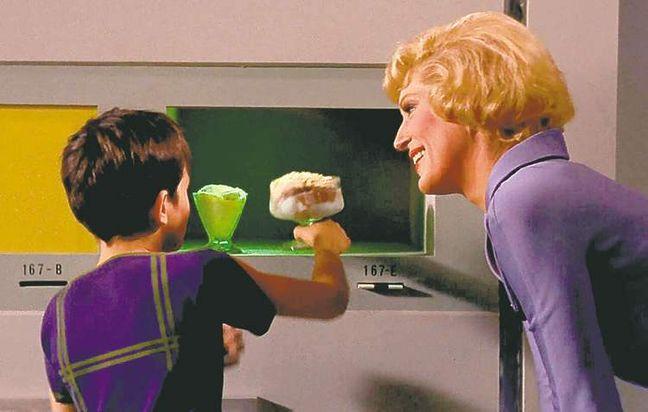
“There’s a perception in the public mindset that 3-D printing is like what they see in ‘Star Trek,’” Shepherd said. “If that’s the idea they have, they’ll be disappointed.”

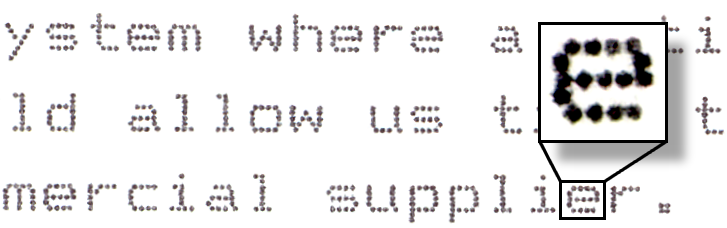
The main point is that 3D printing has come a long way from being a science project of nerds into a something that can be a common part of people’s homes and offices.   I agree with the experts above that one should not expect miracles with such emerging technology.  However, remember the old dot-matrix printers from the 80’s.  Now we are printing photographs that can rival any photographic paper, 3D models, circuit boards and for God’s sake PIZZA!  So somewhere down the road, the stuff that you see in Star Trek: The Next Generation might become a reality.

Thank you for reading another one of my posts done just for you!  If you liked what you read please share it by using one of the buttons up top and check out other posts in this blog.  I don’t want you to miss out on future posts so please follow me on Twitter @Eurodude23 If you haven’t done it already, please like my fan page by clicking here See you next time!

Monday, July 14, 2014

The Surprising thing TechCrunch's Co-Founder has to say about an European Startup Community

By: Paul Chen

Mid-last month was this year's edition of Bitspiration, Krakow's premier startup event. I had a chance to sit down with the co-founder of TechCrunch, Keith Teare to discuss his new project, Chat Center and how he felt about the Krakow startup community.


After Bitspiration, what is your impression of the Krakow Startup Community?

First of all, I'd like to say that Karakow is an impressive city. It is more like a Western European city due to its abundant culture. I am impressed by the quality of engineering and IT talent. It is on par with their western-peers. I like the high quality of mentoring available here. Young talent are treally in good hands here. I also like how well developed the network of investor angels are here.

How do you see the geographic positioning of the city?

I see it ias a great asset. Like Prague and Budapest, Krakow can be see as a bridge between the East and the West. It is one of the last major stops before heading into Eastern Europe and Asia.


How can the community have a more sustanable growth?

Focus on the big idea.

What do you mean by that?

Here in Europe, they don't really like taking risks. And when they do, they expect a fast return. I believe there should be an environment setup that encourages risk taking.

How do we do that?

A startup typically takes about 5 years of growth to succeed. However, if the angel or the VC expects a fast return on their investment, they could force the team to leave the station before the train arrives. Investors should be patient with the startup and give it all the resources for it to grow, especially: TIME.

People can be very impatient. What is the risk in that?

Like any biological ecosystem, you need time and investment to build a robust one. If you try to rush it too much or are impatient enthusiasm will dwindle and the whole ecosystem will start to fizzle out or worst case scenerio, die because you are not getting the return that you were expecting. However, if you let it grow organically and give it time, you will start to see bigger and better returns.

Should people still try to go to Silicon Valley?

I think Silicon Valley is still the proving ground of many wonderful startups. That said, I think it isn't the only one. Startups in Krakow shouldn't just focus on the local Polish market. They should try to go global. Silicon Valley is getting harder and harder to get into, but there are lots of other markets that can be just as lucrative, for example Asia and Africa.


Thank you for your time, any last minute remarks?


You have a good thing going here. It is growing nicely. Enjoy the trip while it is happening, don't be in such a hurry to get to the destination.

Thank you for reading another one of my posts done just for you!  If you liked what you read please share it by using one of the buttons up top and check out other posts in this blog.  I don’t want you to miss out on future posts so please follow me on Twitter @Eurodude23 If you haven’t done it already, please like my fan page by clicking here See you next time!

Friday, June 27, 2014

The Second Jagiellonian Age

For the first time in half a millennium, Poland is thriving, says Vendeline von Bredow. 

Can it last?


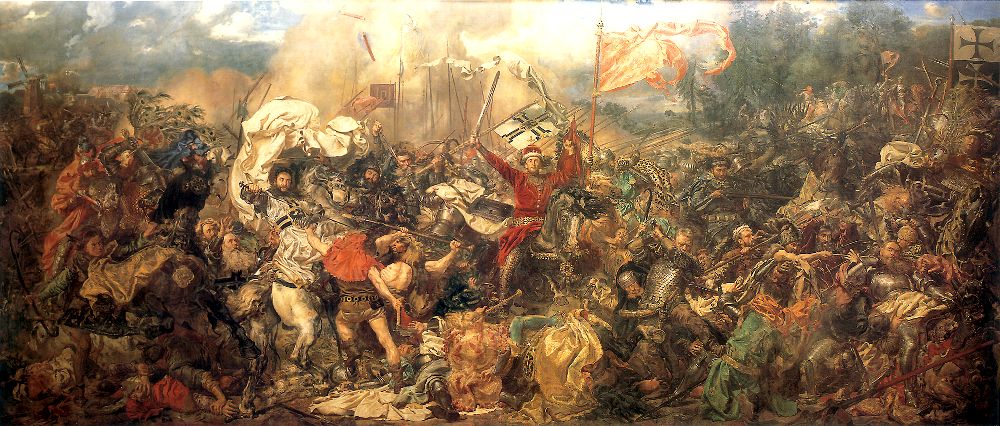
“I AM PROUD of my country,” says Aleksander Kwasniewski, Poland’s president from 1995 to 2005. And well he might be when it is celebrating a series of happy anniversaries: ten years of European Union membership, 15 since it joined NATO and 25 since the fall of communism in eastern Europe. Not since the days of the Jagiellonian kings in the 16th century, when Poland stretched from the Baltics almost to the Black Sea, has it been so prosperous, peaceful, united and influential.
When the Iron Curtain came down in 1989, Poland was nearly bankrupt, with a big, inefficient agricultural sector, terrible roads and rail links and an economy no bigger than that of neighbouring (and much larger) Ukraine. At the time the ex-communist countries with the best prospects were widely thought to be Czechoslovakia and Hungary. Hopes for Poland were low.

But rigorous economic shock therapy in the early 1990s put Poland on the right track. Market-oriented reforms included removing price controls, restraining wage increases, slashing subsidies for goods and services and balancing the budget. The cure was painful, but after a couple of years of sharp recession in 1990-91 Poland started to grow again. It has not stopped since, and received a further boost when it joined the EU in 2004. Since then economic growth has averaged 4% a year. GDP per person at purchasing-power parity is now 67% of the EU average, compared with 33% in 1989, and the economy is almost three times the size of Ukraine’s. The country has redirected much of its trade from its eastern neighbours to the EU, started to modernise its transport infrastructure and restructured some of its ailing state-owned industrial behemoths. Read on ...
Thank you for reading another one of my posts done just for you!  If you liked what you read please share it by using one of the buttons up top and check out other posts in this blog.  I don’t want you to miss out on future posts so please follow me on Twitter @Eurodude23 If you haven’t done it already, please like my fan page by clicking here See you next time!

This is a partial repost of an article that appeared on the Economist on June 28, 2014.


Friday, June 20, 2014

Four Startups Awarded by Hub:raum

By 


The second edition of hub:raum Krakow WARP, one of the biggest acceleration programs for tech startups in Central and Eastern Europe, is over. The jury, consisting of the representatives of hub:raum Krakow and its mother company Deutsche Telekom as well as a variety of journalists and specialists, chose four projects out of over 250 entries.
The winners of this year’s hub:raum accelerator are Romanian startup Appscend and a project from Macedonia called KHAL. They were both invited to join the incubator. Two other startups, VORM from Poland and Croatian ThiefScry were given the opportunity to further develop their ideas for cooperation and success in European markets.

Appscend and KHAL, the two teams invited to hub:raum’s Innovation Center, will get to benefit from funding totalling €80,000 per project, professional mentoring, a free coworking space and access to Deutsche Telekom’s network of over 150 million clients.  Read on...
Thank you for reading another one of my posts done just for you!  If you liked what you read please share it by using one of the buttons up top and check out other posts in this blog.  I don’t want you to miss out on future posts so please follow me on Twitter @Eurodude23 If you haven’t done it already, please like my fan page by clicking here See you next time!

This is a partial repost of an article that appeared on bitspiration.com on June 20, 2014