Wednesday, January 13, 2016

MIT Tech Review President Kathleen Kennedy’s prescription for Polish Start-ups and innovative Entrepreneurs

Paul Chen


Over the last 116 years, MIT Technology Review, is the go-to place for in-depth reporting on the latest in technology and what is to come. Their articles are insightful, comprehensive, and authoritative.  Their mission is to equip their audience with the intelligence to understand a world shaped by technology.  Part of their work is to point out some of the most innovative people in the world.  This year they brought their Innovators Under 35 program to Poland for the first time.  As the grand finale of the Bitspiration Festival in Warsaw in a ceremony, they awarded ten young Poles with Innovators Under 35 distinctions. They have also awarded two of those with Social Innovation Special Mention and the prestigious Innovator of the Year. I had a chance to talk to Kathleen Kennedy, the President of the MIT Technology Review.

Kathleen Kennedy began her career at Deloitte and Touche in accounting. But having found her calling in media, she left finance to join a startup that specialized in media research for the film industry. Kathleen worked on a wide range of movies for major studios, including Warner Bros., Paramount, and 20th Century Fox. In her 14 years at MIT, Kathleen has helped MIT Technology Review redefine the magazine brand and achieve success in a rapidly changing market.  She has helped to create a new type of media organization that was based at MIT but remained an independent entity from MIT. She has since helped to build this new type of media organization and that means that they diversified away from being a single title magazine into a robust media organization that has a number of different channels.



MIT Technology Review has been seen as an authoritative source of information on technology. How did your publication get to that point?

We do this with serious journalism, written in clear, simple language, by a knowledgeable editorial staff, governed by a policy of accuracy and independence.
We use features, news analysis, business reports, photo essays, reviews, and interactive digital experiences that invite our readers to probe deeper, examine data, get to know experts and their opinions—to see, explore, and understand new technologies and their impact.
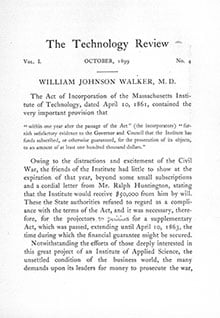
Technology was quite a different thing at the founding of the magazine in 1899. Has anything changed now in 2015?

Our mission has been pretty much fundamentally the same over the last 116 years: to help leaders and technologists and policymakers to understand what is the impact of new technologies.  And today we see the most interesting new technologies such as artificial intelligence, robotics, biomedicine, smart devices, Internet of Things, and in new energy sources as a vast amount of technologies that are fundamentally changing our world. They are allowing people to harness new technologies to help our world become more sustainable and to solve our most pressing problems.


MIT Technology Review is not more than just the magazine, can you tell us what are some of their other endeavours?

We have host competitions like the Innovators Under 35 competition that is now in twenty two regions around the world.  Our MIT Enterprise forum organization is a community and support organization for technology entrepreneurs. In that, we have twenty five chapters around the world.  In addition we still have our flagship magazine and we are expanding our events globally where with the MIT Enterprise forum we have over four hundred community events around the world. Our signature MIT Technology Review flagship event called M. Tech which in 2016 will be in ten markets.  

In a world with so many technology related media outlets, how has MIT Technology Review manage to get above all the noise?

As our mission statement is all about the impact of new technologies. Therefore, editorially, what we try to do is not only explain the new technologies but talk about why they matter.  And that is that is our unique value proposition. It's not just ‘OMG’ technologies and “aren't they cool” but in fact how new technologies are being harnessed by people to fundamentally solve problems.  So we look all around the world at data from all kinds of different sources. That data is being harnessed to understand what are the patterns and how those patterns can help people to identify and solve problems.  Just tonight we saw and heard from Stefan one of the Innovators under 35 from Belgium to talk about his new company that is harnessing telecom data for aid workers so that they can work better and work smarter and actually see patterns and stop hunger in Africa.  So that's just one example of of a fantastic story that shows how innovators are harnessing new technologies to address a major issue.


Many people would like to say that we live in a world of crisis. Climate change was a major call of the Pope of all people. Here in Europe we have some financial crisis with Greece. However, in Chinese, the characters for ‘crisis’ also translates to opportunity. So which opportunities do you see in the next decades?

MIT Technology Review is leading a new initiative from MIT called Solve. It is organized around four major pillars.  


One is called Learn: We're looking at their how technology is fundamentally changing education and how we need to change education to allow anyone in the world who wants to learn to be educated.  New technology is a major solution for that. We've seen cases rise up all around the world. There are systems in place that will allow a young kid in India who has a real aptitude for math to learn from some of the best mathematical minds in the world in Cambridge Massachusetts.  And we've had some fantastic results.  This pillar is empowering people all around the world to be able to take charge of their own education and have the tools that they need to be able to truly learn.  

The second pillar is Cure: We are looking at how new innovations are making health care more effective and efficient for people all around the world.  Professionals are looking at new types of diagnostics.  For instance, in some microfluidic technology that is allowing health care workers in regions all around the world that didn't have proper medical care before to have very cheap disposable diagnostics. This allows them to take a drop of blood or a drop of saliva and drop it onto a piece of paper that has microfluidics on it.  This allows diagnosis to happen rapidly in the field.  That's just one example.  

The next pillar is called Fuel: What fuel is looking at is really the health of the planet. We are thinking about how we need to harness new technologies to help with climate change issues and really fix the health of the planet.  So there we’re looking at renewable energy and new types of solar technology.  One area that we're very interested in this thinking about how do we create better battery power.  If you think about it, batteries are often a limitation on new technologies.  If you think about your cell phone or think about your home being able to store power is one of our big barriers.  So there are fantastic technologists working on new types of batteries. That's one thing that was discovered at MIT but there's people all around the world working on these new technologies that are going to help us create more sustainable energy.  

And lastly the fourth pillar is called Make: Make is really about automation entrepreneurship and the workforce for the 21st century and beyond.  How are we training neural networks or what will be comprised of that workforce. There's a lot of controversy around this. There's a bit of fear around this topic but there's an amazing amount of progress that making around creating a more efficient work force to power our world.  That will be a much more effective and efficient and allow people to realize their true potential.  


During our pre-interview conversation, you expressed your astonishment on how much Poland has progressed. Can you elaborate on that?

This is my first time in Poland so I will admit that I'm not an expert on the Polish ecosystem. However, in the short time I have been here, I have met some amazing people.  I am very impressed with the level of technical expertise and the enthusiastic outlook of young innovators.  I think that there is a real desire to improve the ecosystem here and build it up.  Earlier today, I met with two young gentlemen that are helping us to establish our MIT Enterprise forum chapter for the Polish market.  They are going to be launching an accelerator program partnering with a number of incubators.  And we're very impressed with our first class of the MIT Technology Innovators under 35: Poland.  They span from Michal Mikulski who is creating robotics that allow rehab to happen much faster.  To Olga Malinkiewicz who is making printable solar cell that will allow people to use solar power and their everyday life. So I was very impressed with the wide range of the innovators here and I believe that Poland is going in a good direction.


Wow, this has been very educational and inspirational. We, in Poland, are certainly looking forward to working with MIT Technology Review to solve global problems.

It’s been a pleasure. I’m sure we’ll do some amazing work.


Thank you for reading another post just for you!  If you liked what you read please share it by using one of the buttons below and check out other posts in this blog.  I don’t want you to miss out on future posts so please follow me on Twitter @Eurodude23.  If you haven’t done it already, please like my Facebook fan page by clicking here!  And if you like the content you have read, and are looking for a content writer for your team please go to www.contentfarm.org for details. See you next time!

Thursday, January 7, 2016

Is Poland still a good Investment - my answer may surprise you

Paul Chen


By now those following the news in Poland as well as from abroad may have noticed that Poland has been the subject of many reports. Most of those don’t exactly paint Poland in a very positive light. Publications like the New York Times, the Economist as well as cable channels like CNN have reported about the worrisome developments in the Polish government. I cannot say whether these maneuvers will result in detrimental outcomes or not, only time will tell. One thing is for sure, the country’s branding is taking a beating.


Every startup founder knows that one of the most important things is the branding for their startup. Branding builds trust. As a result, investors may not trust Poland as a place to invest their money. So you ask me,”Is Poland still a good investment?”


A good investor needs some information to make an educated judgement, so let me drop some major knowledge on you.


Encouraging Statistics


Currently, Poland is forecasted to have a +3% in growth in their economy with over $13K  per capita. The corporate tax rate is holding steady at 19%. Poland is ranked 26th in the world for the penetration of mobile communications along with 57% penetration with smartphones. With 67% of the population having access, it ranks 22nd in the world for the penetration of internet.


Because of investor jitters, foreign currency is worth more in Poland than in the last few quarters. There hasn’t been positive inflation in Poland since 2014. The quickest growing sector in terms of employment is in the service sector with 57% of the over 18 million people workforce.


Only 7 of such in the world


Google just opened up a Campus in Warsaw to bring their years of experience and some leadership to the Polish startup community.


Industry leaders in Southern Poland


Krakow continues to be among the European leaders in terms of high technology. It is one of the industry leaders in the shared services sector with over 45,000 employees. There are over 100 multinational corporations with a branch in Krakow. In the last couple of weeks, I was at a meeting where the city has announced increased efforts to build on their already excellent communications between the city and the high tech businesses.


Krakow leads Poland in the number of graduates with a technical degree and ranks third in Poland in terms of IT. Krakow has 40% of the world’s market share in producers of bluetooth beacons in Estimote and Kontakt.io.


Disrupting Museums and Fashion


A local startup used such proximity to world class beacons to their advantage. HG Intelligence has implemented their Synerise solution in Gino Rossi, a major fashion retailer in Poland. People who downloads the Gino Rossi app will be privy to some exclusive deals via pushes from beacons. Such solutions has also been installed in MOCAK, a contemporary arts museum to enhance the interactivity between the visitor and the artwork. Many users have tried the MOCAK app. It received positive reviews. These apps already have thousands of downloads.


A more secure cloud


Ever since their participation in the 2013 Disrupt Europe Startup Battlefield in Berlin, and things have been pretty interesting for Sher.ly in the two years that have passed. It is a SaaS-based software that essentially gives teams and telecommuters a private, project-centric cloud with the goal of giving users full control over their data.  It was successful on their Kickstarter campaign for their Sherlybox, a slick-looking desktop network storage system that puts a personal cloud on your desktop complete with removable hard drive and a touch sensor for configuration, raising $150K from 900 backers. They have just started to ship the Sherlybox. So far they have sold 1000 units along with 6000 business customers.


A heart for the Tinman


Anyone can create their own personal robot with the innovative RoboCORE. It is the marquee product of Husarion. Fresh off of their successful Kickstarter campaign, raising over $50K from a little over 300 backers, they recently completed a tour of Silicon Valley. Their tour was the result of winning a startup competition by Business Link and the US Market Access Center as a part of the Ready to Go 3 week accelerator program. Their RoboCore units are ready to be shipped.


24 hour gourmet shop


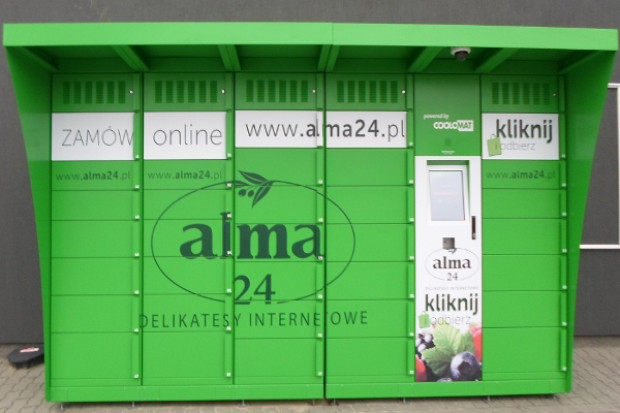
Imagine having to work late but the stores will be closed by the time you get out of work? Coming home to an empty fridge is not very pleasant. Coolomat will help solve your grocery shopping needs. They recently teamed up with the upscale Polish supermarket, Alma, in their Alma24 e-shop.You can get anything from bottles of olive oil to Polish ham delivered to a postal locker so you can pick it up anytime you want within a certain period of time. Their lockers are temperature controlled so your ham will not get spoiled. The postal locker method of delivery have been very popular in Poland among busy e-commerce customers who cannot pick up their packages during the operating hours of the post office.


A Unicorn in the making


In a recent article appearing on CNBC, Brainly  was featured as a possible candidate in the mythical Unicorn Club, a startup with over $1B in valuation. It is certainly exciting to follow this startup from Krakow. Currently they are helping students with their educational needs across the globe, from Indonesia to Russia. They have tens of millions of users as well as millions of downloads of their app. So far they have raised about $10M.


Despite the current wave of negative press about Poland. The numbers and developments in the Polish startup community can speak for itself. Polish entrepreneurs and startups are pressing forward independent of what is going on in Warsaw. More and more Polish businessmen are thinking beyond the borders. Is Poland still a good investment? Absolutely!

Thank you for reading another post just for you!  If you liked what you read please share it by using one of the buttons below and check out other posts in this blog.  I don’t want you to miss out on future posts so please follow me on Twitter @Eurodude23.  If you haven’t done it already, please like my Facebook fan page by clicking here!  And if you like the content you have read, and are looking for a content writer for your team please go to www.contentfarm.org for details. See you next time!

Tuesday, December 29, 2015

StartUp Europe Week Invades Krakow

Paul Chen


Entrepreneurship is the engine that drives economies. It is behind the success of Silicon Valley. It is how we are able to enjoy most of the wonderful product and services today. It is great to be a consumer but it is even better to be a producer.


However, many entrepreneurs are clueless when it comes to what type of resources that are available to them in their community. Startup Europe is an initiative of the European Commission that would like to help European entrepreneurs and startups with education about resources and support in their local ecosystem as well as on the European scale.


On the week of February 1st to the 5th, Startup Europe will be holding Startup Europe Week. It is a continent-wide effort to educate entrepreneurs or would be entrepreneurs about the resources available to them in their own community.


Now here is the big news: I have brought the effort to Krakow! The event will be February 5th, 2016 from 18:00 at the Krakow City Hall.  Yes, the city hall! The event is still being planned so please stay tuned to further updates.


Here is the Facebook event link for the event:


Krakow, I need your help!


I would like to educate the members and potential members of our ecosystem about:


– Information sessions on local specific actions currently developed by your local authority to support entrepreneurs (i.e. grants, tax breaks, office space, funding etc.).
– Regional authorities will come to speak with you and make sure which current initiatives can benefit you and your startup.
– Information sessions about Startup Europe projects and European Commission funds available for startups.
– Office hours and workshops with regional representatives to guide entrepreneurs and aspiring entrepreneurs on topics in which they can help (i.e. how to incorporate a company, how to apply for a cohesion grant etc.).
– Great talks with local entrepreneurs and investors on how they smartly used the resources provided by the local authority to create or improve their businesses.


I am looking for the following people to make this a kickass event:


VCs
Seed Fund Administrators
Startup Lawyers
Incubators
Accelerators
Mentors
CoWorking Space operators
Software houses
Angel Investors
Media personnel
Fellow Startup founders
Representatives from the City (Krakow)
Representatives from the Voidvoship (Malopolska)
and more…


If you are one of these and would like to get involved, please contact me at chen.paul23@gmail.com

In order to keep this event free for all, I would like to have some awesome sponsors. If you would like to help with food and drinks as well as other promotional give-aways, please feel free to contact me!

Thank you for reading another post just for you!  If you liked what you read please share it by using one of the buttons below and check out other posts in this blog.  I don’t want you to miss out on future posts so please follow me on Twitter @Eurodude23.  If you haven’t done it already, please like my Facebook fan page by clicking here!  And if you like the content you have read, and are looking for a content writer for your team please go to www.contentfarm.org for details. See you next time!

Thursday, December 17, 2015

Social network for Polish students that is doing better than LinkedIn and FaceBook


Facebook, LinkedIn and Twitter are not solving student and graduate problems.


Damian Słuja created BaseConnect.org, a social network for students and graduates, where they can connect with prospective employers.


There is no such a service for students and graduates!


Damian Słuja attended a conference in 2011 for international student organizations and it was here that Damian realized that there was not one social networking that is focused around important student affairs, event and resources. Moreover there was not one platform to connect student entrepreneurs and university graduates together with prospective employers.


Damian, with his friend Rafal, prepared the initial conception of the social network and pitched the idea at the Krakow startup event, Hive53 Boat Swarm, in 2012, where he met Ian Scarffe, an entrepreneur and an expert in the methods of Lean Startup, who liked the original idea, and joined together to develop the original concept into a working prototype.


Students find employers, and employers find students!


Since the original concept, the team has grown to more than thirteen employees, including: Ruby on Rails programmers, graphic designers, and specialists in sales and marketing, ambassador’s and student volunteers.  


Together, they are working on building BaseConnect as a student and graduate community portal, through which students and university graduates can connect, search and view resources, join student organizations, as well as apply for internships, jobs and review information about possible employers.


According to Damian Słuja, some small to medium companies do not realize the potential and scope of attracting the interest of young professionals. “BaseConnect has the tools to support and create employer branding pages as well as assisting in maintaining the image of companies in the eyes of student and graduates.”


In the fierce talent acquisition wars, companies must attract, develop and retain a highly diversified global pool of talent in their specific industries. Companies need structure, cultures and practices that stimulate diversity and enable the development of each individual employee. BaseConnect provides an ecosystem of all these elements in one place  - Damian says.


An Investor who can add ‘portfolio’ value


BaseConnect brings together twenty-three of the largest universities in Poland and cooperates with more than twenty career offices in Krakow, two hundred and twenty-five student organizations and clubs, as well as over 900 corporations.


Damian Słuja explains that the currently goal is to monetize the platform both in Krakow and other Polish cities, and look to Polish investors. “We intend to source specific investors who can add true value and who has the experience in scaling such portals within Europe and internationally.”


Capital to scale business abroad


We intend to scale the business within Poland and the cities across Poland, after which time we will continue to monetize the portal and provide value to employees seeking students and graduates. Our ultimate goal is ‘global domination’. We want to deliver real value for our base of users: students and graduates - says Damian Słuja.


Author:   Adam Sawicki  Mamstartup.pl


Thank you for reading another post just for you!  If you liked what you read please share it by using one of the buttons below and check out other posts in this blog.  I don’t want you to miss out on future posts so please follow me on Twitter @Eurodude23.  If you haven’t done it already, please like my Facebook fan page by clicking here!  And if you like the content you have read, and are looking for a content writer for your team please go to www.contentfarm.org for details. See you next time!

Saturday, December 12, 2015

Making The Impossible Possible: The BeaconValley Global Hackathon


Several months ago we came up with the idea of hosting a global hackathon—a hackathon so big that one city couldn’t contain it. Everyone thought it was crazy. We even thought it was crazy, but we’ve never let that stop us before. A startup organizing an event in four cities around the world simultaneously doesn’t sound possible. Well, the hackathon is over now and it did even better than we had hoped back when it was just a mad dream! Let’s recap what happened last weekend in Krakow, London, New York, and Guadalajara.

Continuing the mission


BeaconValley started as an idea to beaconize our hometown, Krakow, Poland that then turned into a 24-hour IoT-themed hackathon we hosted in June 2015. This first edition attracted 100 developers and resulted in 16 amazing apps using Bluetooth Low Energy to transform different areas of our everyday lives. Starting with that idea, we expanded it to a bigger, better, grander hackathon.

Making it happen

Organizing a simultaneous 4-city hackathon is a “hack” of a lot of work, so we partnered with Proxama, a mobile commerce, loyalty, and payment solutions provider, who helped us make it happen and shared their TapPoint technology with our hackers.

The event launched on Saturday, November 21st. The task that we set for our participants wasn’t a simple one: create a smart city app that would solve a problem in at least one of the following areas: culture, health, transportation, or commerce. Based on the execution, we picked four local winners at each hackathon location, out of whom we selected the Global Winner.


Beyond that, Proxama chose a winner of their challenge of using the TapPoint platform. Each location also had their own local challenges suggested and sponsored by our local partners. In total, all prizes were worth $8,200!
Creating the world’s biggest beacon hackathon

It wouldn’t be that fun to simply hold four hackathons in several locations; the trick was to create one hackathon and to make our attendees feel that they’re a part of something bigger than the usual hackathon experience. We had a video call between each location so our local hackers could say hello to each others and share their impressions. We also live streamed our opening presentations by Kontakt.io in Krakow and Proxama in London and displayed them at other locations and promoted them in social media to let everyone watch it. Moreover, we hosted a behind-the-scenes live stream from Krakow, London, and Guadalajara. Finally, our support lines were available for 24 hours to all the attendees, no matter where they were.

Mission accomplished!


In total, 250 hackers in 39 teams participated in the BeaconValley Global Hackathon, and they developed 32 ready-to-use apps. If you’re into numbers, here’s an infographic we’ve prepared:
But hackathons aren’t only about numbers. They’re about building great solutions in a great atmosphere. So how did we do?


All the members of the jury were impressed by the teams’ creativity and motivation. We really wish we could reward everyone, but while everyone who participated in our hackathon was a winner in terms of wealth of experience and opportunity to learn new things, we had to select just a few winners of our cash prizes. Here they are:

The Global Winner: Malito Minds from Guadalajara, for “Discover the world” app that gamifies the city experience by encouraging a user to collect points spread around the area

Proxama’s Challenge Winner: Kitowcy from Krakow, for “Let’s play Krakow” app that uses beacons and TapPoint to guide tourists around Krakow

Here is a video of the summary:


If you want to see how these apps work and learn about other local winners, pop over to this playlist and let us know in the comments which team you like the most!


We want to thank everyone who attended, either physically or virtually. Congratulations to winners and kudos to other brave warriors. Keep going and get ready for the next edition! Now that we know that BeaconValley can be not only about building one smart city but connecting many of them, we’re even more excited about it. And we can’t wait to do it again!

This is a repost of a blog post that appeared on Kontakt.io on November 30, 2015

Thank you for reading another post just for you!  If you liked what you read please share it by using one of the buttons below and check out other posts in this blog.  I don’t want you to miss out on future posts so please follow me on Twitter @Eurodude23.  If you haven’t done it already, please like my Facebook fan page by clicking here!  And if you like the content you have read, and are looking for a content writer for your team please go to www.contentfarm.org for details. See you next time!