Tuesday, August 12, 2014

10 TOOLS FOR UNDERSTANDING AND DISSECTING AN INDUSTRY

Eze Vidra
General Partner, Google Ventures at Google


I remember the first time I met Mark Gerson, the founder of expert network company Gerson Lehrman Group (where I previously worked), as he described how Gerson Lehrman Group (GLG) first started. Investors (mainly hedge funds at the time), needed a way to quickly understand an industry they were going to invest in. One day could be pharma and the next, commercial real estate. Resources abound online, but the noise-to-signal ratio is high, and the content needs to be verified and curated. So he teamed up with a few PhDs and set off to write a book about each major vertical – Healthcare, Technology Media and Telecom, Energy and Industrials, Retail and Consumer Goods, etc.  A few hedge funds bought the books and Mark went to ask for feedback. The books are great, they said, but who has time to read them? They wished they could speak with THE person (or people) that can answer all their questions right now. GLG continued to build it’s expert consulting network in the years to follow to become one of the top primary research tools for institutional investors because they have helped their customers to make things simple quickly.
“Simple can be harder than complex: You have to work hard to get your thinking clean to make it simple. But it’s worth it in the end because once you get there, you can move mountains.”
Steve Jobs

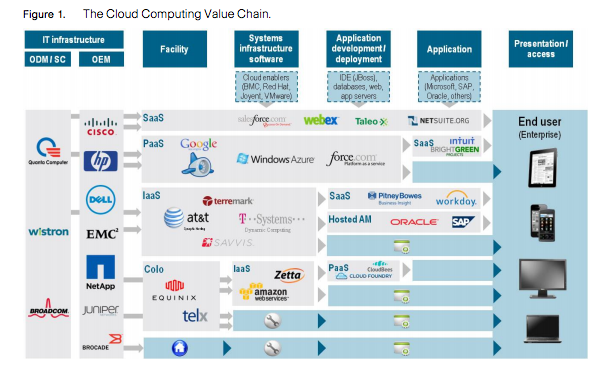
Whether you’re a startup founder, angel investor or VC, you’ve probably had the need to quickly understand an industry. Dissect the supply and value chain, understand how money flows and what companies are playing in each category. Wouldn’t it be great if you could quickly understand what’s going in mobile gaming, SaaS, marketplaces, etc?
As Steve Jobs said, it’s hard work to make complex things simple, so I wanted to share a few resources that helped me simplify industries and verticals. There’s quite a range of information sources from curated reports to aggregated data.
1) Industry reports

Companies like Gartner, Forrester or eMarketer regularly produce reports about tech trends and verticals. These tend to be high quality, but expensive. Tip: many of the top business schools subscribe to these resources, so MBA students have access to these for free sometimes. Investment banks and financial services firms like EY, KPMG or Deloitte are also excellent sources for industry reports. Corporates offer great insights as well from time to time, but you may have to dig deep in their websites to find it. Here’s examples from Google Market insights, CiscoMicrosoft ResearchIBM Research or this IHS report on Wearable tech. Usually, the information is high quality.
2) Infographics and LumaScapes
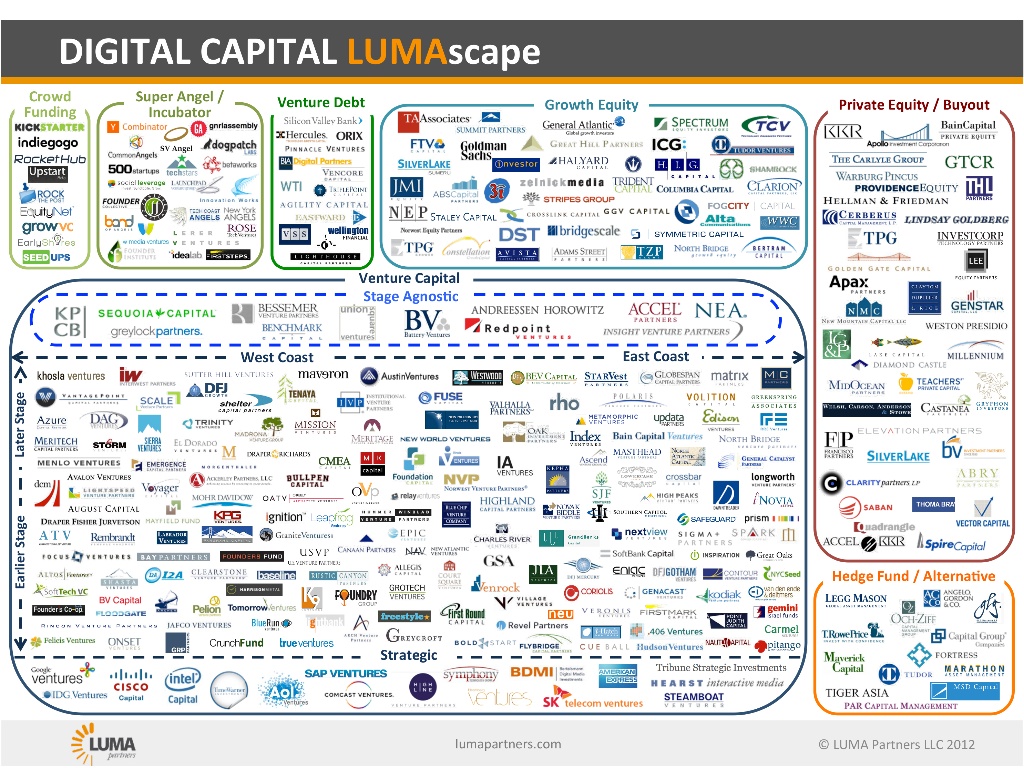
“LumaScapes”, the one-pager infographics created by consulting firm Luma Partners, provide a quick snapshot of the various parts of an industry and the logos of the companies playing in that space. Check out the Digital Capital LumaScape below. Other LumaScapes include  Content Marketing,  Gaming and several more, which were previously covered here on VC Cafe.
3) OnePagers.io
Yesterday I came across Onepagers, and was instantly intrigued. This new resource by Clement Vouillon aims to crowdsource the most relevant info on a certain vertical. Pages are already available for MarketplacesSaaS and Security Software, with several others planned. I’ve asked Clement for his top sources and in his own words on ProductHunt:
The first stage is basically “search” only and requires time and effort. The sources are mainly Google, Twitter, Quora, industry and tech blogs for the resources and for the startups Angel List, Crunchbase and producthunt.
The second stage requires more “analysis” and the hardest thing is to get a clear picture based on hundreds of resources you’ve just read. The more you do it the more you get used to it actually. So for each trend I need to read a lot, to think about it a lot and then to stop completely for some time. Then it’s easier to have a clearer picture and to create the competitive landscape.
4) VentureScanner
Imagine you could hire a consulting analyst. VentureScanner effectively offers this as they provide sector focused analyst coverage on a range of sectors (from 3D printing to the future of TV). 30 days free trial then $99 a month.
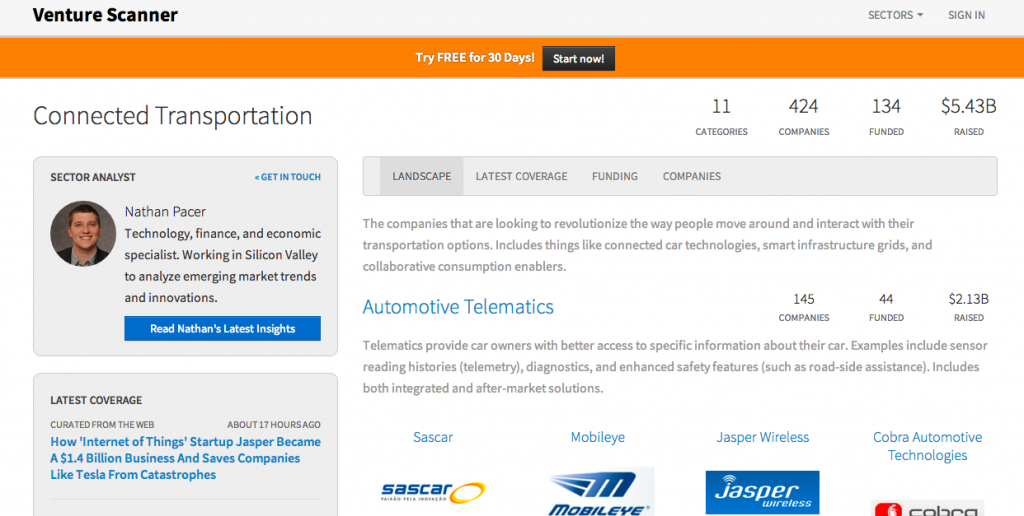

“We start with a real-time market landscape, complete with a comprehensive map of companies categorized by sector, funding information, and curated articles from around the web.”
5) Evolita
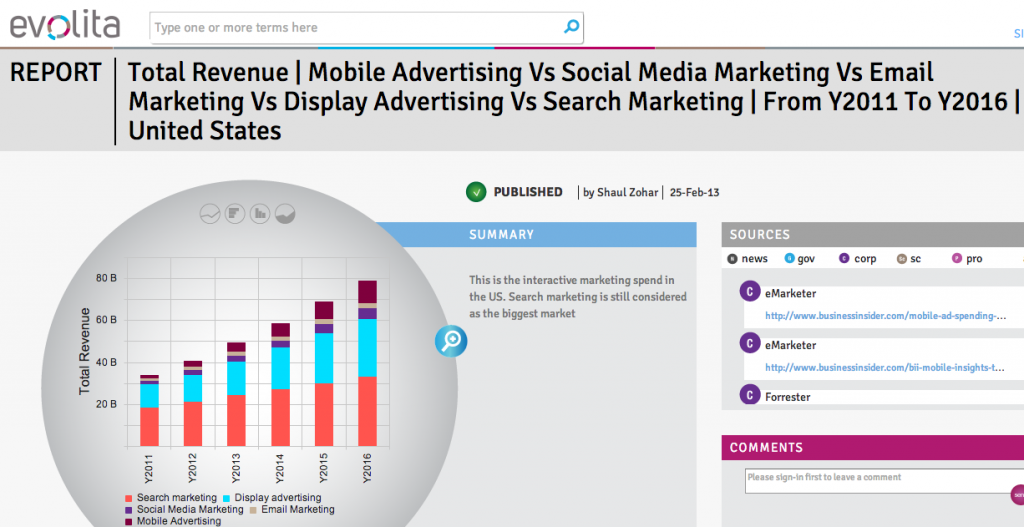
Visualizing the data is half the battle. Israeli startup Evolita (still in alpha) takes a variety of publicly available resources and plots them on pleasantly looking graphs.
6) CB Insights
CB Insights regularly produces data-driven reports and analysis on venture capital, private equity, angel investment, mergers & acquisitions, IPOs and emerging high-growth industries. Also recommend checking out the research blog.

7) Mattermark
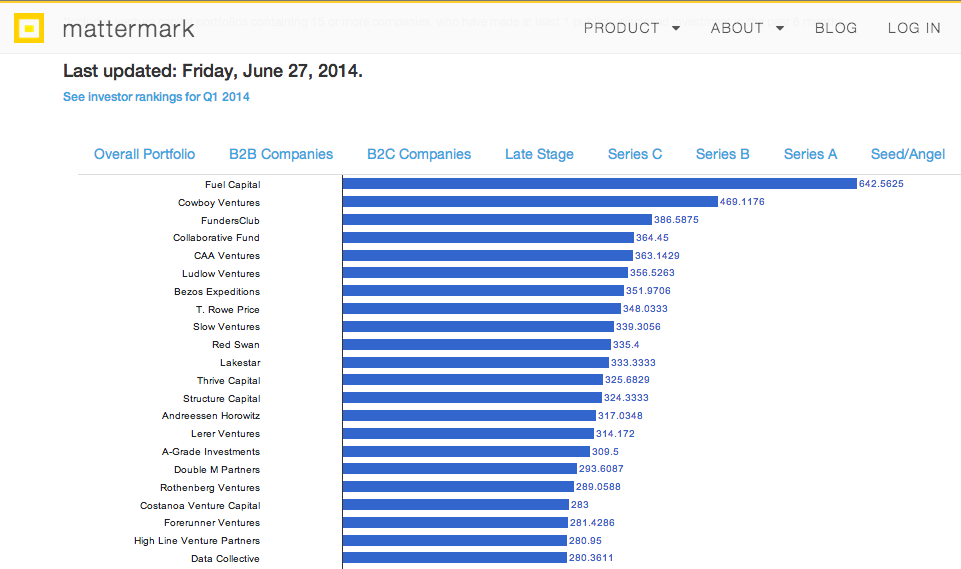
Mattermark’s goal is to track growth signals from all private tech, media and telecom companies. Mattermark assigns a score to private companies, determined by the growth of 6 signals: web traffic, mobile downloads, inbound links, Twitter followers, Facebook page likes and Linkedin followers.  Mattermark also ranks investors performance by tracking dozens of growth signals including web traffic, mobile downloads, inbound links, employees, and social media for more than 200,000 private companies. Using this service makes it easy to see where VC money is flowing and what companies are performing.
8) Clarity
Clarity.fm, similar to Google Helpouts, offers an on-demand expert network for startups. The San Francisco based startup offers a marketplace for expertise, where entrepreneurs are able to ‘consult’ with experts on a pre-determined price per-minute. Want to really understand an industry? There’s nothing like speaking to the people who are in it.
9) Quora
Quora offers a wealth of knowledge, where experts take the time to elaborate on a thoughtful response. The challenge is that quality varies and many great questions remain unanswered. So, if you want to build good karma, answer a few questions where you bring expertise and help this community grow. Here’s a good answer for the purpose of understanding industries: How does the TV industry work?  and here’s a poor one for comparison How does the Fashion industry work?
10) Google Data Explorer and Google Market Insights
Originally launched in 2010, the Google Data Explorer makes large, public-interest datasets easy to explore, visualize and communicate. The tool aggregates various publicly available datasets and helps you plot them on graphs (see example below). Google Insights shares the studies conducted by Google on various industries from high-level visions to deck-ready data points. 
Check out the Databoard for Research insights to get the up to date stats for your research or build your own infographic.
Bonus
11) Whale Path - 
Whale Path provides on-demand, fully customized market research and competitive analysis by letting the user define their research needs and outsourcing the research bit to a pool of qualified researchers. Quotes are provided within 48 hours.
Ultimately, you have to curate your resources. My recommendation is to use these in a mosaic approach, piecing together bits of information that will eventually create the big picture. It’s not enough to list the companies in the industry, or know who got funded, but if you’re able to understand the value and supply chain and add company information on top, you’re getting close. For that reason, OnePagers.io excites me the most. I look forward to seeing what will come out of it once it’s open to the crowd for curation.


Thank you for reading another one of my posts done just for you!  If you liked what you read please share it by using one of the buttons up top and check out other posts in this blog.  I don’t want you to miss out on future posts so please follow me on Twitter @Eurodude23 If you haven’t done it already, please like my fan page by clicking here See you next time!
This is a repost of an article that appeared on vccafe.com on August 11, 2014



Monday, August 11, 2014

Decoding Alibaba

Paul Chen


In the last few months, Alibaba has been making a big splash in the media due to its hyped mega-blockbusting IPO.   China’s biggest e-commerce company may set the IPO value at $154 billion, according to the average estimate of five analysts surveyed by Bloomberg. The same analysts see the post-listing valuation as $198 billion.   Industry experts estimate that the IPO will allow the company to raise $20 billion. 

The CEO doesn’t code

At a Stanford talk, Jack Ma, the CEO of Alibaba, said that he hadn’t written a single line of code for the whole internet infrastructure.  He doesn’t even understand the magic behind the internet.  What he does appreciate is that it exists and that it works.  Even with such wealth and success, he still has great respect for the technicians and developers who works for his group.  He appreciates that technology has the power to change the world. 
However, he is not one to depend on technology.  To him, technology is only a tool to help others achieve their wishes and dream.  What he wants to do is to help others succeed and make it easier for others to become entrepreneurs. 
Jack Ma started from very humble origins.  Who knew that a English teacher from 20 years ago would become someone who would run a multibillion dollar business today? The difference between him and his colleagues? He tried something different and he worked damned hard at it. 

Trust and Relationships


Jack Ma also uses the old Chinese way of doing business which is building trust and relationships.  Without trust and relationships, no matter how great your product or service is, no one will buy it or invest in it.  Along with that, he focuses on the business side of the company.  He wants to build traction and make sure that people will use your business.  He said that having traction is better than the best business plan that a Harvard MBA can write.

Don't be Greedy


Jack Ma is also a believer that you should keep the door open.  He is proud of his success.  He wants to help others be successful.  He thinks being greedy is a bad thing. By spreading the opportunity, will there be faster progress in society.

One of the best movies to help anyone understand some of the thought process and the progression of events in China is American Dreams in China by Peter Chan.  In this movie, you will understand why Alibaba decided to list their company in America.  I would recommend this film to anyone who are thinking of initiating a startup or anyone who has a startup.


This movie is a good introduction to how China became where they are right now.  It has to do with being willing to do things that other people are unwilling to do.  It has to do with finding a way to get your customers to be able to digest whatever you are selling.  It has to do with how Chinese people can work under some of the most undesirable conditions. 

The movie also addresses the transition where China and its companies finds its own voice and become one that can stand up to their American counterpart.  Of course, some people will try to find faults in the film.  However, I believe that you shouldn’t focus on the small details. Just be able to tak in the overall message.  That message is,” China’s in da house, and you’d betta recognize!”

Another good film to understand Alibaba is Crocodiles in the Yangtze by Porter Erisman. 

Thank you for reading another one of my posts done just for you!  If you liked what you read please share it by using one of the buttons up top and check out other posts in this blog.  I don’t want you to miss out on future posts so please follow me on Twitter @Eurodude23 If you haven’t done it already, please like my fan page by clicking here See you next time!

How a community is born: The rise of Polish startups

Borys Musielak 


When we raised a seed round for Filmaster from a German fund HackFwd in Spring of 2011, we were one of the first Polish startups to work with a foreign investor. Traditionally, Web companies in Poland were focused on the local market of 40 million people, which seemed big enough to scale their business.
Big European and US­-based VCs, however, were not impressed. They looked for startups with global ambitions, something the Polish ones lacked. Three years later and Poland has got a number of well-­funded startups disrupting global markets. What the hell happened?

By accident, community is born
With fresh funding on my company account, I started looking for a nice place to work. The search wasn’t going well. All the cool lofts were either too expensive or too far away from the Warsaw city center.
It turned out I wasn’t the only desperate one. With Kuba (Netguru) and my friend from college Anna (Homplex), we teamed up and found a cool old-­fashioned house in Żoliborz where we settled. We moved in on July 1, 2011 and invited friends from emerging startup community to work with us.

We called the mansion Reaktor, as we wanted it to be the place where people and ideas collide and where disruption is born. When we threw the house­warming party, we did not expect it would attract over 100 founders from all around the country. At that point we realized that Warsaw lacked a place where startup people could feel at home.
Overnight, the house became an epicenter of the Warsaw startup community. We decided to host monthly meetups inviting accomplished founders from all around Europe to share their stories. Because everything we did was in English, we quickly started to attract foreign investors and journalists looking to find out about the Polish startup ecosystem.
With access to great founders and early look at new projects, we became a good proxy to match foreign investors with local startups.

Founders share their stories


Jerry Colonna, John Biggs, Simon Cross (Facebook), teams of Babelverse, Infogram and EyeEM shared their stories in Warsaw. The stories spread when we shared their successes and failures to the world, thanks to Web streaming and Vimeo.
Have you heard of Ela Madej? You should! She was the first Polish founder to be accepted into YCombinator (and failed), turned her Cracow­based software Applicake house into Base, a leading CRM app for the post­PC world, raised $22.9M in funding to date and continues being just as open and helpful as before she made it big.
Ela gave an amazing talk during one of the events inspiring a number of fresh founders to “do crazy shit” as you never know what turns out to kick off.
Showroom is another example of a Polish startup which has grown considerably in the recent years. Before its founders made it to the top they had to learn that a failure is integral to successful career. Michał Juda and Jasiek Stasz gave an honest talk about the mistakes they made while building European’s biggest marketplace for independent fashion.
Finally, Yuri Drabent, a celebrity-­status founder of Lubie.to, a social media agency now acquired by Isobar, shared his thoughts on the importance of personal branding to your startup’s success. If you’re going to watch only one online talk by a Polish founder in your life, go for this one.

Making waves across Europe


When Kamil Adamczyk first told us about his ideas to constantly measure your brain activity with a sleep­mask which wakes you up in the middle of the night so that you can work on your startup, we thought he was crazy. His IntelClinic pitch at TechCrunch Meetup Warsaw that left John Biggs wondering whether Kamil’s real business wasn’t selling meth didn’t make it better.
The company became laughing stock. No one laughed half a year later when Kamil raised close to half a million dollars on Kickstarter to make his sleep dream happen, and then proceeded to win LeWeb Startup Competition as the best startup in Europe. I still don’t know how and if it works, but the guys seem to know what they’re doing and they are onto something big.

The rise of iBeacon


About the same time, Jakub Krzych pitched his new venture calledEstimote, asking us for intros to some EU-­based investors. He described his company as “Google Analytics for the real world” and talked a lot about something called ‘beacons’­ that was going to be huge in the coming years.
Fast forward a couple of months and Estimote joined YCombinator as the second company from Poland. About the same time, Apple released iOS 7 with integrated iBeacon.
Estimote won Best Hardware Startup award at TechCrunch Disrupt and quickly followed ­up by raising 3.1m USD, becoming one of the pioneers in iBeacon technology. The guys now work with brands like Virgin Atlantic or Easyjet.
The success of Estimote helped other Polish iBeacon companies like Kontakt.ioand Ifinity to find funding and traction, making Poland the world player in the fast­growing iBeacon industry.

Making it global


When MichałMarcin and Paweł came to work at Reaktor in 2012, they had been bootstrapping an invoicing platform Fakturownia for a while. They also worked on three other startups (all targeting the Polish market) at the same time and really struggled to decide where to go next.
When you’re making enough money living off the set of apps you developed it’s hard to take risks. But a couple of months and a few events later I started hearing they are more and more ready to focus on one product and target the English-­speaking market. We’re in 2014 and the guys work 100 percent onInvoiceOcean, a now global invoicing platform available in the US, UK, France and Poland, serving 60k+ customers.
What’s more: 30 percent of new customers are from outside Poland. The startup will be pitching at TechCrunch Disrupt London as a result of winning Pirates On Shore pitch competition in June.
As we’re celebrating Reaktor’s third anniversary this week, it would be hard to overlook the amazing change Polish startup scene went through during last three years.
The story of InvoiceOcean is representative for many Polish startups. In 2011, no one seriously considered building a global brand out of Poland. Today, we have a number of truly global startups in industries ranging from hardware tools, SaaS services, 3D printing, iBeacon, social media monitoring and more.
There are many reasons why this happened. Polish market got saturated and launching a successful company here is not as difficult as it used to be. Polish leading investors like Innovation Nest or HardGamma Ventures built global networks to help their founders be successful in Europe and Silicon Valley.
However, I believe that the main reason driving this change is simply the fact that Polish founders learned to share their stories and take lessons from each others’ failures.
In 2014, the dream of building the first billion dollar company from Warsaw or Cracow remains a dream. But I don’t think many people would be surprised today if it suddenly came true.
To learn more about interesting startups in Poland, follow @Polish_Startups on Twitter, watch other inspiring talks and check out the Bitspiration blog which covers new projects.

Borys Musielak is the founder and CEO of Filmaster.

Thank you for reading another one of my posts done just for you!  If you liked what you read please share it by using one of the buttons up top and check out other posts in this blog.  I don’t want you to miss out on future posts so please follow me on Twitter @Eurodude23 If you haven’t done it already, please like my fan page by clicking here See you next time!

This is a repost of an article that appeared on thenextweb.com on August 8th, 2014

Thursday, August 7, 2014

Don’t Waste Your 20s at a BPO, go work at a Startup


Investing your time in your 20s wisely enables you to spend the rest of your life doing what you love, not searching for what you might love. So the real question you should be asking yourself is: How do I learn the most (about myself and the things I’m interested in), in the shortest time period possible, so I know what I want to be when I grow up?
Lets start with what not to do – go work at a big tech company. Unfortunately, that’s not the easiest choice to make. Google and all the big tech companies recruit on campus. The perks seem attractive (free food and occasional visits by Hillary Clinton or Bono). The brand feels impressive. The pay is good. A lot of your friends likely work there so there is a certain social comfort level. It feels like a stepping-stone to other things. The trouble is that your learning curve is unbelievably slow. If you are an engineer, you likely work on a large project whose contribution is likely irrelevant to the outcome of the business. You’re going to have high variance in the quality of people you work with (because in a company of 50,000 people that is almost certainly going to be true). You’re going to ship production code relatively infrequently. If you are a product manager – you are not facing the most important challenge of a real product manager (building such a product so great that even a lack of distribution capability doesn’t inhibit its success).
If you are a salesperson – it’s hard to know if you are being successful because of you or because of the brand you represent. Fundamentally, you’re in the slow-lane as far as learning curves go. The skills you do cultivate, navigating large organizations or dealing with politics, are ones that don’t push you to the intellectual or emotional edge. Ask yourself the question: will the prospects of the big tech company I join change if I join? The answer will be no. And therefore neither your impact nor your learning can be significant. As a result, you might leave a little richer but you really don’t know a whole lot more about yourself and you’re likely much further behind your friends at start-ups or growth companies.

Big service businesses like McKinsey or Goldman Sachs also seem like super interesting opportunities. They pay well. They offer you the opportunity to flit between different projects (Consulting) or different deals (Investment Banking). You get to travel the country or the world and you’re told that you will be interacting with senior executives at clients. Some of that is true. The trouble is, for 90+% of people who work at big services businesses – they are routes to other careers, not careers in and of themselves. That would be fine if the skills you learn there enable to you to learn a lot about yourself. But most of the ex-consultants and ex-bankers I know are about as uncertain about what they want to do in life as they were on the day they joined the big service company. Rather than clarity, the diversity of projects just creates confusion. While there may be some good critical thinking skills that you cultivate – remember that the fundamental job of a Consultant or Banker is to put together PowerPoint presentations and excel spreadsheets that give advice – rarely to implement anything. Your learning will be so concentrated in strategy (5% of life) that you will lose out on learning skills in the more important part (execution).
I spent two years at a big service company in my 20s (Investment Banking @Lazard) and three years of my 20s at a big tech company (Cisco). But I learned 10x more about myself and the path I wanted in life at a start-up named FirstMark Communications where I was a founding member of the team and spent 3+ years at between the ages of 23 and 26. FirstMark was insane – we built a broadband network to provide high-speed Internet access across Europe in the late 1990s. It was a classic telecom bubble story that involved raising $1bn of capital, hiring 600+ people, dealing with government regulators in 10 countries, interacting with Henry Kissinger, building out optical networks and going after a big mission to go wire the planet. There were a ton of things we screwed up at FirstMark and a bunch we got right. But it was a life changing experience for me.
I had accepted admission to business school before I got involved in starting FirstMark and having been both an engineer and an investment banker, I was pretty uncertain about what I wanted to do in life. I would have likely been even more confused after the Business School experience. Instead, I got involved in starting FirstMark and it was the defining experience of my 20s. It told me I wanted to be an entrepreneur and more importantly, it gave me the confidence to do it. I learned more about business and myself in the first month at FirstMark than at 2 years at Lazard or 3 years at Cisco. And while it was intense, stressful, volatile and crazy – I loved it. I had clarity - the rest of my life was going to be about entrepreneurial pursuits. Interestingly, many of my friends and colleagues at FirstMark did not. Some went back to Wall Street. Some went to go work at big technology or telecom businesses. Some went back to school. But they all found themselves and the professional path they wanted in life.

Going to work at a start-up or growth company in your 20s will put you on the fast-lane learning curve. It will be the best investment you can make because you’ll find yourself. The folks who have come into BloomReach in their 20s unclear about their passions, often emerge knowing who they are – becoming business development people or founders or product managers or people managers. They find their calling fast because the pace of the business requires it. You might be concerned about what happens if your start-up fails. Relax. You (probably) don’t have kids at home. You can always move into your friend’s crappy 1 bedroom apartment for a couple of months. And I promise you this – the most employable person in the tech industry is the highly motivated 25 year old (ideally with technical skills). So even if that start-up doesn’t work out, don’t worry - you’ll have plenty of other opportunities and a clear sense of yourself.

Thank you for reading another one of my posts done just for you!  If you liked what you read please share it by using one of the buttons up top and check out other posts in this blog.  I don’t want you to miss out on future posts so please follow me on Twitter @Eurodude23 If you haven’t done it already, please like my fan page by clicking here See you next time!
This is a repost of a post written by Raj De Datta on Linkedin.com