Wednesday, August 6, 2014

Krakow: Polish Startup Factory continues its campaign to Build Dreams

By Paul Chen


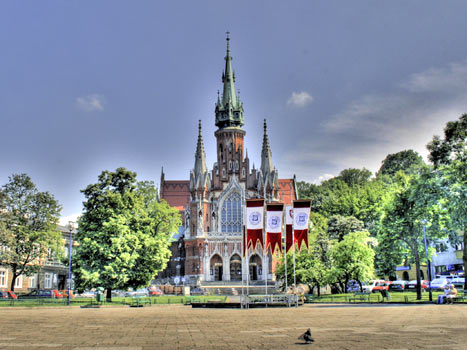
With Krakow’s own Kontakt.io’s blockbuster $2 mill gain in their latest round of fund raising, things are certainly hopping this summer in our gem of a town in the south of Poland. All of a sudden, Podgorze is the place to be for Krakow startups.  It started with Hubraum moving here in last winter.  This district was in the past home to Oscar Schindler’s famous enamel factory as portrayed by Steven Spielberg.  It was also the place of the old Jewish Ghetto during WW2.  You can still see some segments of the old wall.  However, jumping to the present, it is now the place where Krakow startups are building for their future. 

Old Chocolate factory building New Technology


Estimote in recent weeks, moved into their new place in Podgorze district of Krakow.  The building used to house a chocolate factory.  Now, it is making something just as sweet.  Jakub Krzych, the co-founder, said that the move was really needed because of the rapid expansion of the company and the team it was hard to work efficiently in their old coworking space.  Furthermore, with the extra space more comes more possibilities.  At the moment, there are still lots of work being done on the premises.  However, when all are done, there could be meetups, hackathons, and other events in the space. 

Coworking in a new space


Colab has also made Podgorze their new home as well.  The coworking space who in the past hosted the current leaders of the community like Duckie Deck, Estimote, Landingi, and Presspad now has about 20 thousand square meters of coworking space available.  It will continue to host the weekly Open Coffees every other week.  Along with a desk with the usual facilities, you would have access to experienced mentors like Pawel Nowak of Presspad and Przemek from Notatek.

Forming new Partners


Speaking of Duckie Deck, the children’s game app developer is also located in Podgorze.  They are located in the Chance coworking space along with Format.  Recently, they have been mentioned in the Washington Post and the Guardian.  They continue to make partnerships with various telecoms and fast food restaurants to provide quality content for their customers. 


Krakow Startups, if you have any new developments that you would like our readers to know about please feel free to contact me.  I would love to cover you. 

Thank you for reading another one of my posts done just for you!  If you liked what you read please share it by using one of the buttons up top and check out other posts in this blog.  I don’t want you to miss out on future posts so please follow me on Twitter @Eurodude23 If you haven’t done it already, please like my fan page by clicking here See you next time!

Tuesday, August 5, 2014

Top 12 Startup Conferences in Europe to get You Funded or Famous!

Sophia Kirova 


It seems like “the time is now” and is right to be an entrepreneur in Europe. The recent report by Dow Jones VentureSource showing that European startups have raised their highest quarterly total since 2001, is nothing but good news. The interesting part is, the capital that has been intensively fueling these startups for the past 3 months, comes mainly from the USA.
With the establishment of the Google Ventures Europe and Index Ventures’ new fund, among others, there seem to be many opportunities to inject some cash in your startup. But pitching your idea to investors still happens in the old-fashioned way - during events or through your network. This is why we have made a small selection of upcoming startup challenges and events, which can give you a solid push by either a cash prize or VC attention.
1. The Pirate Summit Cologne 1-5 September (Currently Open)

“Founders, high-profile investors and entrepreneurial rockstars”, The PirAAARte Summit is a true networking event. Early-stage startups can take the "Walk-The-Plank"-pitch challenge. On boat of this-year’s ship, there will be 3 events and various entrance fees to choose from. For modest pirates, there are special early-bird offers and also free tickets. But hurry, since the free roadmaps to Treasure Island are scarce, you will have to AAARply for some.

2. RE.WORK London 18-19 September (Currently Open)


A demo stage for all aspiring leaders from Robotics to SpaceTech to EduTech. Startups have 4 minutes to demo their product and 4 minutes for questions. Prizes are also included in the package: a two-hour technical coaching & business mentoring one-to-one session with iMakr and 1 year's access to GA's online on-demand videos (Front Row) plus £200 credit to GA classes & workshops in London. Applications close on 15 August.
3. Webrazzi Summit Istanbul 25 September


Webrazzi is Turkey’s most prominent digital conference covering all things digital - Digital Marketing, Social Media, E-commerce, Venture Capital, Angel Investment, Online Gaming, Mobile Applications. Strong accent on the MENA startups, many keynote speakers, industry guests, founders and media. If you check the attendees, you will spot Mike Butcher (TechCrunch) and Robin Wauters (Tech.eu). A splendid networking event.
4. Founders Games Istanbul 1-2 October


The Global Webit Congress is the the largest digital and tech annual conference held in Turkey and probably one of the biggest in the World with more than 10,000 attendees coming form 110 different countries. During the two-day agenda of the GWC takes place the Founders Games, which is the most startup friendly digital and tech industry event. Webit Ambassadors Foundations commits over €1 million to startups providing 200 of them with free expo stands, tickets and media advertising budgets together with global partners such as IBM, Blackberry, Qualcomm, Softlayer, BBC, MTG, ProSieben, ITP and many more. Other focus of the Foundation is to improve the life of the people in Africa through education and technology.
5. IDCEE Startup Competition Kiev 9-10 October (Currently Open)

The Ukrainian Conference gathers 300 investors, startups and leaders for 2 days in early October. 3 out of the 150 startups that will be invited to pitch, will share a €30 total cash prize. You need to be working in the field of Internet technology, less than 3 years old and have no more than €3M of investment.
6. Startup Battlefield London 20-21 October (Currently Open)

Startup Battlefield is the startup competition of TechCrunch Disrupt. 15 teams pitch their products live on the Disrupt stage in front of judges, press, live and online audience. TechCrunch’s editors, VCs, entrepreneurs and product experts select 6 companies for a final, “drama-filled” round. The winner takes it all - a £30,000 check and the coveted Disrupt Cup.
7. Pioneers Festival Vienna 29-30 October (Currently Open)


The startup program of Pioneers Festival in Austria welcomes all software and hardware companies - Web & Mobile, AI, Robotics, IoE, Space, MedTech, Fintech, Data. Startups are entitled to an exhibit booth and compete for a pitch slot. 50 finalists get their 90 seconds of stage fame. Success stories and more info here. Applications are open until September 1.
8. Numa 2014 Tampere 4-6 November (Currently Open)


Takes place within the November MindTreck 2014 forum on tech, knowledge and media in Tampere, Finland. The competition is open to all designers, computer scientists, artists, economists, and engineers who can combine ubiquitous computing and media. Prizes are in cash. Call is currently open until 31 August.

9. The Summit Dublin 4-6 November 


There is just one thing you need to know about it: you couldn’t get more exposure at an event. It’s glossy and chic and famous. Startups can exhibit for free.
10. Slush Helsinki 18-19 November


You might not really be up for a slush on a cold November day in Finland, but the event is certainly worth it. These Finish guys’ mission: “to help the next generation of great, world-conquering companies forward”. It is a mighty entrepreneurial community so we can’t help but recommend it to any startup. All teams get pre-set meetings with more than 100 VCs and a chat with many media people. You will most certainly get featured in the news as a “promising” new talent.
11. Startup Spotlight 2014 Competition Bucharest 20-21 November


The ex-”How to Web” conference in Romania is rebooting and will strike back this year under a new name. The organizers are preparing a yet stronger event with more light on startups. You can check the info from previous editions here. Follow their blog and twitteraccount for the latest updates on the new event.

LeWeb is a biannual industry conference with two venues - Paris and London. It’s a great place to catch up with the latest tech trends but also a one-of-a-kind chance to make yourself known to the startup community. Waze, a social GPS company and previous Startup Competition winner, was acquired by Google for $1.3bil. Applications will open soon.
+Bonus - as we talk Europe, we should never forget the economic power of the Union. EU gives diverse grants to startups under theHorizon 2020 program.

Startupbootcamp will attend most conferences to meet great startups. If you want to meet, keep an eye on our 
@Sbootcamptwitter account.

Any other hot startup competitions across Europe on your radar? The list is not exhaustive, so feel free to add what’s missing in the comments. Cheers, @Sophia & @Peter

Thank you for reading another one of my posts done just for you!  If you liked what you read please share it by using one of the buttons up top and check out other posts in this blog.  I don’t want you to miss out on future posts so please follow me on Twitter @Eurodude23 If you haven’t done it already, please like my fan page by clicking here See you next time!
This is a repost of an article that appeared on http://www.startupbootcamp.org/ on August 4, 2014

Monday, August 4, 2014

Do startups give more than due attention to valuation?


Can’t wait to chat with a VC?

YourStory presents ‘Ask Your VC’– an opportunity for you to connect with a VC virtually, through a forum of questions and answers. You ask the question, we ‘connect’ you with the expert to get meaningful and relevant insights pertaining to the entrepreneurial eco-system.

Q: Do startups give more than due attention to valuation?
A: Some of the young startup founders want to get rich very fast. While that is not a bad goal in itself, if this is the primary motive to start up, the startup is doomed. Building a startup is incredibly hard and if founders want to take the first available opportunity to exit, the business will never scale up.
We believe building a successful startup takes 8-10 years. Even though great exits are not common in India, if you don’t even survive that long, you are unlikely to generate any meaningful value for your investors or yourself.
When you are setting out for a journey so long, checking the milestones every now and then is only going to distract. Plus the ‘wealth’ you are creating in process of building a startup is only notional and you will rarely be able to withdraw any piece of it in first few years. Hence, we believe that startups give more than required attention to valuation.
Q: What is the relevance of valuation during funding- early stage v/s growth stage startups?
A: Valuation, in very simple terms, is the amount an incoming investor is willing to pay for buying a piece of the company. The value of a company is not just a function of the fundamentals of its business. It also depends strongly on the view of the investor about the firm and her assessment of the founders’ ability to create a successful venture. Hence, the valuation of private companies, even growth stage startups, is a very inexact science.
At the same time, however, the valuation ranges become more defined as the startup becomes mature. For example, the valuation bracket of Flipkart is unlikely to change drastically till its IPO. While a couple of good quarters in a growth stage company like Helpshift can make a big difference in the amount VCs are willing to spend for the same pie in the company. For a still early stage company like TouchTalent, even a couple of months of good momentum can land them in a sweeter deal.


Q: How relevant is the concept of valuation during the funding process?
A: Although terms of a funding are usually quite complex, valuation remains a very important part of the funding process. In most cases, it is a make-or-break scenario for the two sides. It is common for founders to walk out of a deal in case the valuation offered is not as per their expectations. Though not the best practice, some founders even use term-sheet offered by a VC to negotiate a better deal with another.
We believe the process of funding should be approached from a ‘fit’ perspective. While an entrepreneur may find more value in a big-name VC, some others may have more passion, insight or connections in the industry leading to faster growth. Since the relationship with a VC is going to be a long-term one, we always advice our portfolio to look for the VC who they feel most comfortable working with.
Arpit Agarwal is a Principal at Blume Ventures, one of the world’s most active micro-VC firms. He tweets at @arpiit

Thank you for reading another one of my posts done just for you!  If you liked what you read please share it by using one of the buttons up top and check out other posts in this blog.  I don’t want you to miss out on future posts so please follow me on Twitter @Eurodude23 If you haven’t done it already, please like my fan page by clicking here See you next time!
This is a repost of an article that appeared on yourstory.com on July 28, 2014

Now, donate in bitcoin !

Time is all about making your past look like a fool in front of your present. When bitcoin was introduced, we would have laughed at the idea of its transaction, leave alone its acceptance as donation. But today, we find ourselves standing in front of the mirror, looking at our past and laughing on our foolishness.
Wikimedia Foundation, the American non-profit and charitable organization mostly known for hosting Wikipedia has today announced that it will accept donations in one more currency, bitcoin.


Lisa Gruwell, Chief Revenue Officer, Wikimedia Foundation mentioned in the official blog,
It has always been important to the Foundation to make sure donating is as simple and inclusive as possible. Currently, we accept 13 different payment methods enabling donations from nearly every country in the world, and today, we’re adding one more: bitcoin.
Bitcoin, a relatively new digital currency, is currently being accepted by a growing number of institutions and merchants throughout the world. Wikimedia Foundation was asked by its community members to start accepting bitcoin. These requests, coupled with recent guidance from the US Internal Revenue Service, encouraged the Foundation to accept bitcoin.
Lisa stated that the foundation has done its due diligence and during this review, they have identified a new way to work around past technical challenges, as well as to minimize the legal risks of accepting bitcoin. She said,
Through our work with Coinbase, a bitcoin wallet and payment processor, we’re able to immediately convert bitcoin to U.S. dollars, requiring minimal technical implementation on our end. Since we now also have guidance on how to account for bitcoin, there is a clear understanding of how to legally manage it.
If you are interested in donating bitcoin to the Wikimedia Foundation, you can now do so on our Ways to Give page. 
Even as Bitcoin interest in India is picking up (Bangalore recently hosted India’s first global Bitcoin conference), banking regulators are still undecided on how to handle the currency.

Also read: The Bitcoin story – Everything you wanted to know

Thank you for reading another one of my posts done just for you!  If you liked what you read please share it by using one of the buttons up top and check out other posts in this blog.  I don’t want you to miss out on future posts so please follow me on Twitter @Eurodude23 If you haven’t done it already, please like my fan page by clicking here See you next time!

This is a repost of an article that appeared on yourstory.com on July 31, 2014

Friday, August 1, 2014

Kaufmann Index of US Entrepreneurial Activity: Silicon Valley leads; immigrants have higher entrepreneurial rates


The recent report by the Kaufmann Index of US Entrepreneurial Activity sheds light on interesting startup trends from 1996 to 2013. Led by Robert Fairlie, Professor of Economics at the University of California, Santa Cruz, the report is packed with US data which indicates that the number of entrepreneurs per 100,000 people in the Silicon Valley area is 570, followed by Los Angeles (490), Miami (430), Houston (340) and New York – New Jersey (320).
The Kauffman Index measures the monthly business-creation rate at the individual owner level, reporting the percentage of non-business-owning adults who start businesses. Data also reveals entrepreneurial activity by gender, race, immigrant status, economic sector, age and education.
In 2013, 0.28 percent of the adult population in the US, or 280 out of 100,000 adults, created a new business each month, which represents approximately 476,000 new businesses per month. The US unemployment rate was 8.5 percent at the end of 2011 and dropped to 6.7 percent at the end of 2013.

Age, gender, education

Male entrepreneurial activity rate was 0.34 percent in 2013, and the female entrepreneurship rate was 0.22 percent. Entrepreneurial rate in the age group 20-34 was 0.18 percent in 2013, for people 35-44 years of age it was 0.31 percent, and for ages 55-64 it was 0.31 percent. An aging population has led to a rising share of new entrepreneurs in the age group 55-64 years; they represent 23.4 percent of new entrepreneurs in 2013.
The least educated have the highest rate of business creation, which might be due to more limited labour market opportunities as compared to more highly educated groups.

Geography

Entrepreneurial activity rates reflect strong geographical patterns in the US. Rates of new business creation are the highest in the West and lowest in the Midwest. The states with the highest entrepreneurial activity rates were Montana (610 per 100,000 adults), Alaska (470 per 100,000 adults), South Dakota (410 per 100,000 adults), California (400 per 100,000 adults) and Colorado (380 per 100,000 adults).
Among the fifteen largest metropolitan areas in the US, San Francisco (0.57 percent) had the highest entrepreneurial activity rate in 2013 and Philadelphia (0.18 percent) had the lowest rate.

Ethnic groups and immigrants


The business creation rate remains nearly twice as high in immigrant populations as the native-born rate. Over the past decade, Latinos, Asians and other immigrants experienced rising shares of all new entrepreneurs, due to increasing populations as well as rising entrepreneurship rates.
The immigrant share of new entrepreneurs in 2013 was 25.9 percent, up from 19.1 percent in 2003. The entrepreneurial activity rate was 0.19 percent in 2013 for African-Americans, 0.38 percent for Latinos, 0.28 percent for Asians, and 0.27 percent for whites. The Latino share of all new entrepreneurs rose from 16.0 percent in 2003 to 20.4 percent in 2013. The Asian share of new entrepreneurs is 6.1 percent.
The native-born rate has remained relatively flat over the last two decades. Immigrants were substantially more likely to start businesses each month than were the native-born citizens in 2013. For immigrants, 430 out of 100,000 people started businesses each month, compared with 250 out of 100,000 people for the native-born population.

Other trends


Entrepreneurial activity rates differed substantially by major industry groups. Though the Internet and mobile sectors understandably attract a lot of attention, in 2013 the entrepreneurial activity rates were actually highest in the construction industry at 1.27 percent, followed by services (0.37 percent) and manufacturing (0.10 percent).
In 2013, 78.2 percent of new entrepreneurs were drawn from those who were not coming directly out of unemployment. Over the past eighteen years, the share of new business creation from ‘opportunity’ entrepreneurship increased when economic conditions were improving and decreased when economic conditions were becoming worse. The largest share of ‘opportunity’ entrepreneurship occurred at the height of the ‘Roaring 90s,’ and the lowest share was in 2009 at the end of the recession.
The recession may have pushed many individuals into business ownership because of high unemployment rates. These individuals were probably more likely to start sole proprietorships and other non-employer firms instead of more costly employer firms, according to the report.

The report is packed with other data which allows readers and analysts to draw a range of conclusions and make appropriate policy interventions. The report also opens to the door to other countries to share their own analysis on entrepreneur trends with respect to age, geography, gender and sector.

Thank you for reading another one of my posts done just for you!  If you liked what you read please share it by using one of the buttons up top and check out other posts in this blog.  I don’t want you to miss out on future posts so please follow me on Twitter @Eurodude23 If you haven’t done it already, please like my fan page by clicking here See you next time!

This is a repost of an article that appeared on http://yourstory.com/ on July 31, 2014